Introduction
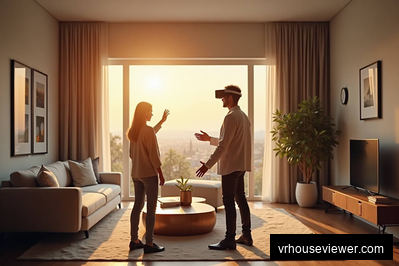
In the era of digital transformation, technology is reshaping industries and practices. Among them, the real estate industry is seeing an exciting development with the advent of Virtual Reality (VR) house viewers. This innovation is revolutionizing how investors interact with properties, even before they physically step foot inside them. Let's unravel how VR house viewers are transforming real estate investing.
As per Goldman Sachs, the real estate market could generate up to $2.6 billion by 2025 through VR technologies. VR house viewers allow potential investors to have immersive 3D tours of properties, thereby enhancing their decision-making process. A case in point is Sotheby’s International Realty, which reported a 60% increase in website engagement after integrating VR, underscoring its effectiveness.
As we delve deeper into the realm of digital transformation, it becomes apparent that a strong introduction sets the tone for successful integration. Just like a captivating opening chapter in a novel, an effective introduction in technology can engage users and pave the way for seamless adoption. Take, for instance, the rise of AI-powered chatbots in customer service. A well-crafted introduction to these chatbots can enhance user experience, streamline communication, and boost customer satisfaction. By understanding the importance of a compelling introduction in technology, businesses can harness the power of innovation to drive growth and stay ahead in today's competitive landscape.
Enhanced Property Viewing Experience
VR house viewers offer an immersive and interactive experience that traditional property viewing methods cannot match. Investors can explore every nook and cranny of the property, visualize space, and even manipulate objects. This not only saves time but also helps in making informed decisions. As per Matterport, properties listed with 3D virtual tours receive 49% more qualified leads.
For instance, the VR software developed by Realvision allows users to virtually walk through a property, enabling them to inspect elements like flooring, countertops, and fixtures in detail. The tool also allows users to switch between different lighting conditions, demonstrating how the property looks at various times of the day.
Beyond just virtual reality (VR) tours, augmented reality (AR) is revolutionizing the property viewing experience. Imagine being able to overlay furniture and decor in real-time to visualize your dream home instantly. With AR apps, potential buyers can interact with the space in a whole new way, rearranging layouts and experimenting with design ideas without lifting a finger. This level of customization and interactivity not only streamlines the decision-making process but also enhances the emotional connection to a property, making it easier for buyers to envision themselves living there.
Remote Accessibility and Time Efficiency
One of the most significant advantages of VR house viewers is the ability to tour properties remotely. This feature is particularly beneficial for investors based in different geographical locations. According to research by Redfin, homes with 3D walkthroughs were twice as likely to sell within 30 days during the COVID-19 pandemic.
An excellent example of this is Zillow's 3D Home app, which allows real estate agents to capture and upload 3D home tours using an i Phone. Investors can then view these tours from anywhere in the world, saving travel time and expenses.
Furthermore, the integration of AI-driven scheduling tools in remote accessibility solutions has revolutionized time efficiency for businesses. These tools analyze user behavior patterns and optimize scheduling processes, saving both time and resources. For instance, companies utilizing virtual meeting platforms equipped with smart scheduling algorithms have reported up to a 30% increase in productivity due to reduced time spent on coordinating meetings and managing calendars. This seamless blend of remote accessibility and AI technology not only streamlines operations but also enhances team collaboration and overall efficiency.
Potential Challenges and Solutions
While the benefits of VR house viewers are clear, there are also challenges. The most significant issue is the cost of VR equipment, which can be prohibitive for smaller real estate firms. Furthermore, not all consumers have access to VR technology, limiting its reach. However, solutions like Google Cardboard offer a cost-effective alternative for viewing VR content.
Another challenge is the complexity of creating 3D content. However, companies like Matterport provide simple solutions for creating 3D property tours, making it accessible for real estate professionals. Their technology can create VR-ready 3D models from simple 2D photographs, simplifying the process.
One common challenge when implementing VR house viewers is the potential for technical glitches or compatibility issues with different devices. Ensuring a seamless user experience across various platforms can be a daunting task. However, a practical solution to this challenge is to conduct thorough testing and optimization for all major devices and operating systems. By investing time in quality assurance and compatibility checks, developers can minimize the risk of technical hiccups that may deter users from engaging with the VR experience.
Another noteworthy challenge to consider is the potential for user discomfort or motion sickness when using VR technology for extended periods. To address this issue, developers can implement features like adjustable settings for motion sensitivity and provide clear guidelines on optimal usage practices. Additionally, incorporating breaks and prompts for users to rest their eyes can help mitigate these challenges and enhance the overall user experience of VR house viewers.
Conclusion
VR house viewers are reshaping real estate investing by offering immersive property viewing experiences, remote accessibility, and time efficiency. While there are challenges such as cost and accessibility, solutions like Google Cardboard and Matterport are making VR more attainable for smaller firms and consumers.
As technology continues to evolve, it is crucial for real estate professionals to adapt and leverage these digital tools for success. As they say, innovation is the key to standing out in the real estate market, and VR house viewers are certainly a game-changer. They not only provide a competitive edge but also enhance customer satisfaction, proving that the future of real estate lies in the virtual realm.
In conclusion, the adoption of VR house viewers in the real estate industry marks a significant shift towards more immersive and interactive property showcasing. This technology not only revolutionizes how investors and buyers explore properties but also opens up new opportunities for virtual staging and customization. Imagine being able to walk through a potential investment property, rearrange furniture virtually, and visualize different design possibilities before making a purchase decision. These advancements not only streamline the buying process but also offer a level of flexibility and creativity that was previously unimaginable in the real estate sector. As VR technology continues to evolve, we can expect even more innovative applications that will further transform the landscape of real estate investing.