Introduction
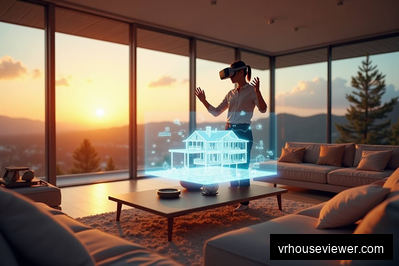
In an era where technology is rapidly transforming every sector, the real estate industry is not left behind. Virtual Reality (VR) is one of the forefront technologies that has revolutionized how real estate agents offer their services. This blog post aims to explore how VR technology is enhancing real estate agent services, offering an immersive and interactive experience to home buyers.
As we delve deeper into the realm of real estate technology, it becomes evident that the concept of smart homes is revolutionizing the way we perceive property ownership. Smart home devices like thermostats, security cameras, and lighting systems are seamlessly integrated into modern homes, offering convenience and security like never before. This introduction to the future of real estate not only emphasizes the importance of adapting to technological advancements but also highlights the evolving preferences of homebuyers who seek innovative solutions for a more connected and automated living experience.
Revolutionizing Property Showcasing
VR technology offers a compelling solution to one of the most tedious aspects of the home-buying process – property tours. Traditionally, potential buyers would have to travel to various locations to view properties, which was time-consuming and often impractical for out-of-town buyers. But, with VR, prospective buyers can now take a virtual tour of the property from the comfort of their own homes.
For example, companies like Matterport are offering 3D capture platforms that create realistic, fully immersive experiences. Users can virtually walk through a property as if they were physically there, inspecting every corner at their own pace. This not only saves time and resources but also allows real estate agents to showcase properties to a wider audience, regardless of geographical location.
In addition to VR technology, augmented reality (AR) is also making waves in revolutionizing property showcasing. Imagine virtually placing furniture in a space to see how it fits or walking through a property without physically being there. AR apps like IKEA Place and Magicplan are paving the way for a more interactive and immersive home viewing experience. This innovative technology not only simplifies the decision-making process for buyers but also allows sellers to showcase their properties in a more captivating and engaging manner.
Streamlining the Design and Construction Process
Another area where VR is making a significant impact is in the design and construction phase. Architects and developers are using VR to create 3D models of their designs, allowing clients to visualize the final product before construction begins. This gives clients a unique opportunity to provide feedback and request changes, ensuring that the final build aligns with their preferences.
A case in point is the use of VR by the architectural firm Gensler. They use VR to present their designs to clients, allowing them to experience their future homes or offices in a completely immersive environment. This has resulted in higher client satisfaction and fewer costly changes during the construction phase.
One innovative tool revolutionizing the design and construction process is Building Information Modeling (BIM). This technology enables architects, engineers, and construction teams to collaborate seamlessly on a shared digital model, streamlining communication and reducing errors. With BIM, stakeholders can visualize the entire project in a 3D environment, allowing for better coordination and planning. Additionally, BIM provides valuable insights into cost estimation, clash detection, and sustainability analysis, resulting in more efficient and sustainable construction projects. By embracing BIM, industry professionals can achieve higher levels of precision and efficiency in every phase of a project.
Offering a Competitive Edge
In a highly competitive market, real estate agents need to differentiate their services to attract and retain clients. VR offers a unique selling point, providing an innovative and engaging experience that traditional property viewings cannot match. Clients appreciate the convenience and novelty of VR property tours, which can lead to quicker decision-making and increased sales.
A study by the National Association of Realtors showed that 77% of agents who use VR say it helps them compete against other agents, and 68% believe it gives them a leg up in selling properties faster. This emphasizes VR's potential as a valuable tool for real estate agents looking to enhance their services and stand out in the market.
One effective way to offer a competitive edge in the real estate market is by harnessing the power of technology. Utilizing advanced tools such as virtual staging software can set agents apart by providing clients with immersive virtual tours of properties. This not only enhances the overall customer experience but also showcases a forward-thinking approach to property marketing. Additionally, offering personalized marketing strategies tailored to individual properties can demonstrate a deep understanding of market trends and client needs, further distinguishing agents in a crowded marketplace.
Challenges and Limitations
Despite the immense benefits, there are challenges and limitations to the use of VR in real estate. The cost of VR technology can be a barrier for some agencies, especially small businesses. Moreover, there's a learning curve involved in using VR technology, which can deter some agents from adopting it. Lastly, VR cannot completely replace the feel and experience of physically visiting a property. Therefore, some clients may still prefer traditional property viewings.
One of the key challenges faced in implementing VR technology within real estate is the high cost involved in creating and maintaining immersive virtual experiences. From developing interactive 3D models to ensuring seamless user experiences, the financial investment can be substantial for real estate companies. Additionally, another limitation is the potential barrier for some clients who may not have access to VR devices or the technical know-how to navigate virtual tours effectively. Overcoming these challenges requires innovative solutions and a strategic approach to balancing cost-effectiveness with cutting-edge technology.
Conclusion
In conclusion, VR technology is indeed a game-changer in the real estate industry. By offering immersive property tours, streamlining the design and construction process, and providing a competitive edge, VR has significantly enhanced real estate agent services. While there are challenges and limitations, the benefits far outweigh them, making VR a worthwhile investment for any forward-thinking real estate agency.
The future of real estate lies in harnessing the power of technology to deliver superior services. As such, embracing VR and other innovative technologies is not just an option but a necessity for real estate agents who aim to stay ahead of the curve.
Expanding on the conclusion reached about VR technology's impact on the real estate sector, it's worth noting how this innovation has revolutionized property viewings. Prospective buyers can now take virtual tours of homes from the comfort of their own space, saving time and resources. This immersive experience not only enhances the decision-making process but also opens up new possibilities for showcasing properties in a dynamic and engaging manner. Additionally, VR technology has proven to be a valuable tool for real estate agents in showcasing off-plan developments or properties in remote locations, giving clients a realistic sense of space and design.